
I’ll be honest with you, when I first looked into building a digital products marketplace on WordPress, I expected it to be a nightmare of plugins, compatibility issues, and half-finished features. And for a while, it was.
Table of Contents
ToggleThen I started paying attention to what platforms like Envato Market and Creative Market were actually doing differently. They weren’t just selling digital files. They built ecosystems, places where vendors want to list their work and buyers keep coming back. The good news? WordPress can do exactly that. The tricky part is knowing where to start.
Your whole setup lives or dies on one decision: the theme. Pick the wrong one and you’ll spend months gluing plugins together, hoping they don’t break each other. Pick the right digital downloads marketplace WordPress theme, and you’ve got a working business foundation on day one.
This guide walks you through everything that your marketplace actually needs, why most themes fall short, and why Heilz by Utillz has become the go-to choice for people who want to build something real, not just something that looks good in a screenshot.
What Is a Multi-Vendor Digital Products Marketplace?
Let’s get clear on what we’re building before we get into tools and themes.
A WordPress multi-vendor marketplace lets independent sellers list and sell their digital products through your platform. You own the site. They stock it. Think of it like running a shopping mall: you maintain the building, set the rules, and take a cut. Vendors bring the goods.
This is very different from running a regular WooCommerce store where you sell your own products. With multi-vendor, your catalog scales as your vendor base grows without you having to create a single product yourself.
Some well-known examples:
- Envato Market: themes, plugins, stock assets
- Creative Market: fonts, graphics, design templates
- Gumroad: eBooks, software, online courses
- Shutterstock: stock photography and video footage
Each of these started small. What made them scale is the model itself: vendors bring their audiences, buyers discover more products, and the platform owner earns revenue through commissions, fees, or subscriptions without creating content.
Key Features Your Marketplace Must Have
Not every WordPress theme is built for this. Before you commit to anything, make sure your solution can actually sell digital products the right way. Here’s what you need:
- Vendor Registration & Dashboards
Your vendors can’t be logging into your WordPress admin; that’s a security and management disaster. They need their own frontend dashboard where they can submit products, check download stats, and track their earnings independently. - Product Submission & Approval Workflow
You need a gate. Vendors upload their files, you review them, and only approved products go live. Without this, your platform quality drops fast and you lose buyer trust. - Secure Digital File Delivery
This one’s non-negotiable. Files need to be locked behind successful payments, with expiring download links that can’t be shared around. If buyers can share download links freely, your vendors will leave and they’ll be right to. - Flexible Monetization Options
A single revenue stream is fragile. You want download plans, vendor submission fees, featured listing boosts, and subscription tiers all available. The more ways you can earn, the more resilient your business is. - A Proper Multi-Vendor Asset DirectoryA multi-vendor asset directory
with real search and filtering isn’t a nice-to-have it’s the whole buying experience. If your catalog is hard to navigate, buyers leave. Good filtering by file type, category, price range, and rating is what turns browsers into buyers. - WooCommerce at the Core
WooCommerce is the backbone of serious WordPress eCommerce payment gateways, order management, and payout handling. Your theme needs to be built around it natively, not treating it like an afterthought or a compatibility checkbox.
Choosing the Right WordPress Theme: Why It Matters More Than You Think
Here’s a mistake I see constantly: someone finds a clean WooCommerce theme, buys it, then spends the next three months stacking plugin after plugin trying to get multi-vendor functionality working. By the end, their site is slow, half the features conflict, and the support threads are a mess.
A purpose-built digital downloads marketplace WordPress theme isn’t just a prettier version of a generic theme. It’s architected differently from the ground up the listings, the vendor system, the checkout flow, the download delivery. Everything is designed to work as one coherent system, not a collection of plugins held together by hope.
What to actually look for:
Multiple listing types with custom fields per category
- Frontend vendor submission vendors never touch your admin
- Monetization baked in, not bolted on
- Mobile-first layouts that actually work on small screens
- One-click demo import to cut your launch time drastically
- A real support team with up-to-date documentation
One theme does all of this well. It’s called Heilz, built by Utillz and it’s worth a closer look.
Introducing Heilz —
A Purpose-Built Digital Downloads Marketplace WordPress Theme
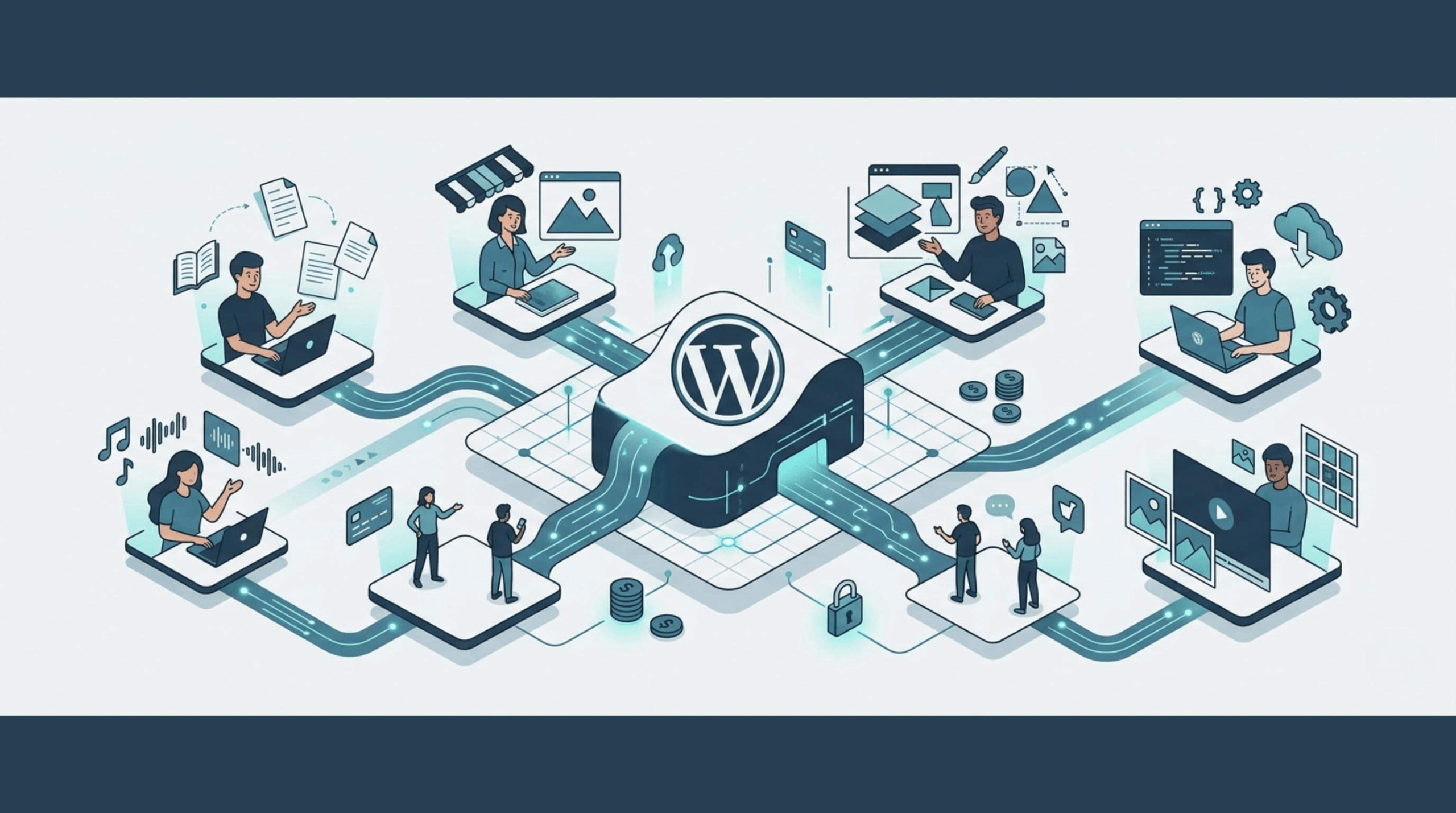
Heilz isn’t a repurposed multipurpose theme with a marketplace plugin awkwardly attached. It was built from scratch for one job: running a digital products marketplace. Whether you’re launching a stock photo platform, a font store, a software directory, or a full multi-vendor asset hub, this theme was made for exactly that.
What you can sell on Heilz:
Stock photos and photography collections
- Premium fonts and type families
- Audio files, sound effects, and music tracks
- Video footage and motion graphics
- Software, scripts, and developer tools
- WordPress themes and plugins
- eBooks, PDFs, and digital documents
Features that actually matter:
- Drag-and-drop customization: Rearrange listing pages, search forms, and archive layouts without touching code. What you see is what your users get.
- Multiple listing types: Fonts display differently from photos, which display differently from software. Heilz lets you configure custom fields and layouts for each type separately.
- Advanced search and filtering: Build multiple independent search forms with different filter sets. Buyers can narrow by category, file type, price, or rating whatever makes sense for your niche.
- WooCommerce monetization: Download plans, submission fees, promotional boosts, and vendor payouts all run through WooCommerce natively. No separate billing plugin needed.
- Vendor dashboards and public profiles: Vendors manage their own listings, track sales, handle messages, and monitor payouts all from the frontend. Buyers get their own profile and download history, too.
- Mobile action bar: A proper mobile nav system with customizable icons for sign-in, notifications, messages, and quick links. It feels like an app, not a shrunk-down desktop site.
- One-click demo import: Pick a pre-built demo, Commercial, Photography, Freebies, or Collections and import it in a few clicks. You’re working with a real site structure from minute one.
Heilz vs. Easy Digital Downloads: Which One Actually Wins?
Easy Digital Downloads is a solid plugin for selling your own digital products, simple stuff, single vendor, straightforward setup. But the moment you want multi-vendor support, you’re looking at stacking EDD Frontend Submissions on top of a compatible theme, managing separate licenses, and hoping everything stays compatible after each update. Heilz is the easy digital downloads alternative theme that skips all of that entirely.
| Feature | EDD + Generic Theme | Heilz Theme |
| Multi-vendor support | Limited | Built-in |
| Custom listing types | No | Yes |
| Asset directory | No | Yes |
| WooCommerce native | No | Yes |
| Monetization tools | Basic | Advanced |
| Mobile-optimized | Varies | Yes |
| Demo import tool | No | Yes |
| Frontend submission | Plugin-dependent | Yes |
The EDD route isn’t bad it’s just expensive to maintain and fragile to scale. Every extension you add is another potential breaking point, another support forum to monitor, and another renewal fee to budget for.
Heilz puts everything under one roof. The vendor system, the monetization, the download delivery, the mobile experience it’s all built to work together. When something needs updating, one theme update handles it. That’s a much cleaner foundation for a serious marketplace.
Monetization Strategies for Your Digital Marketplace
One of the underrated advantages of using Heilz to sell digital products is that you’re not locked into a single revenue model. Here’s what’s available to you from day one:
- Download PlansSet up tiered access to your product library. Free accounts get a handful of downloads per month. Paid subscribers get unlimited access. This is subscription revenue that compounds with every new buyer who upgrades, adding to a recurring monthly baseline.
- Vendor Submission FeesCharge vendors to list on your platform. You can sell submission credits one at a time or bundle them into listing plans. Either way, you’re generating income that doesn’t depend on buyer activity, vendors pay just to be present in your directory.
- Promotional Boosts and Featured ListingsLet vendors pay to appear at the top of search results or category pages. It’s high-margin, low-overhead revenue for you, and it directly benefits vendors who want more visibility. Everyone wins.
- Commission on SalesTake a percentage of every transaction processed through your platform. WooCommerce handles the split natively no manual calculations, no awkward payout conversations. Transparent for vendors, effortless for you.
- Premium Content TiersCreate exclusive collections that only paying subscribers can access. It gives buyers a reason to upgrade beyond just download volume, and it gives your best vendors a premium showcase that’s worth paying for.
Growth Tips for Your Digital Marketplace
Getting your marketplace live is step one. Growing it is the longer game and it’s one worth playing strategically from the start.
- Treat Every Listing Like a Landing Page
Each product page is a chance to rank for something. Push vendors to write real, detailed descriptions. Proper tags and categories matter. High-quality preview images matter. And if you implement Product schema markup, Google can show price, rating, and download count directly in search results that’s a serious click-through rate boost. - Turn Category Pages into SEO Assets
Your archive pages, the “stock photos” page, the “premium fonts” page, and the “WordPress plugins” page are goldmines if you treat them right. Add category descriptions, curate featured products, and build internal links to them. Long-tail search traffic lands here and converts well because it’s highly specific intent. - Run a Blog Alongside the Marketplace
Tutorial posts, buyer guides, and roundups (’10 Best Free Fonts for Branding in 2025′) drive organic search traffic that converts into new users. A well-written blog attached to your marketplace also builds topical authority that strengthens your product listing rankings over time. - Implement Schema Markup Properly
Product and Review schema on listing pages can unlock rich snippets in Google Search star ratings, prices, and download counts visible right in the results. It takes a bit of setup, but the visibility impact is real and lasting. - Build Your Vendor Community Intentionally
Your vendors are your best growth channel. Feature top sellers on the homepage. Run monthly challenges. Build a referral or affiliate program so vendors have a financial reason to promote their own store pages which means promoting your platform. Every vendor who markets themselves is marketing you for free.
Wrapping Up
Look building a digital marketplace on WordPress isn’t something you want to figure out on the fly. The decisions you make in the first few weeks shape everything: how fast your site loads, how easy it is for vendors to join, how smoothly buyers can check out and download. Getting the foundation wrong means rebuilding later. Choosing the right digital downloads marketplace WordPress theme upfront saves you that pain.
Heilz by Utillz is one of the few themes on the market that was genuinely built for this use case. Not adapted, not retrofitted built for it. The vendor system, the monetization tools, the mobile experience, and the WooCommerce integration it all works together the way it should.
If you’re serious about launching a marketplace that can actually scale, it’s the place to start.
The Marketplace of Your Dreams Is Already Built. Just Add Your Products.