
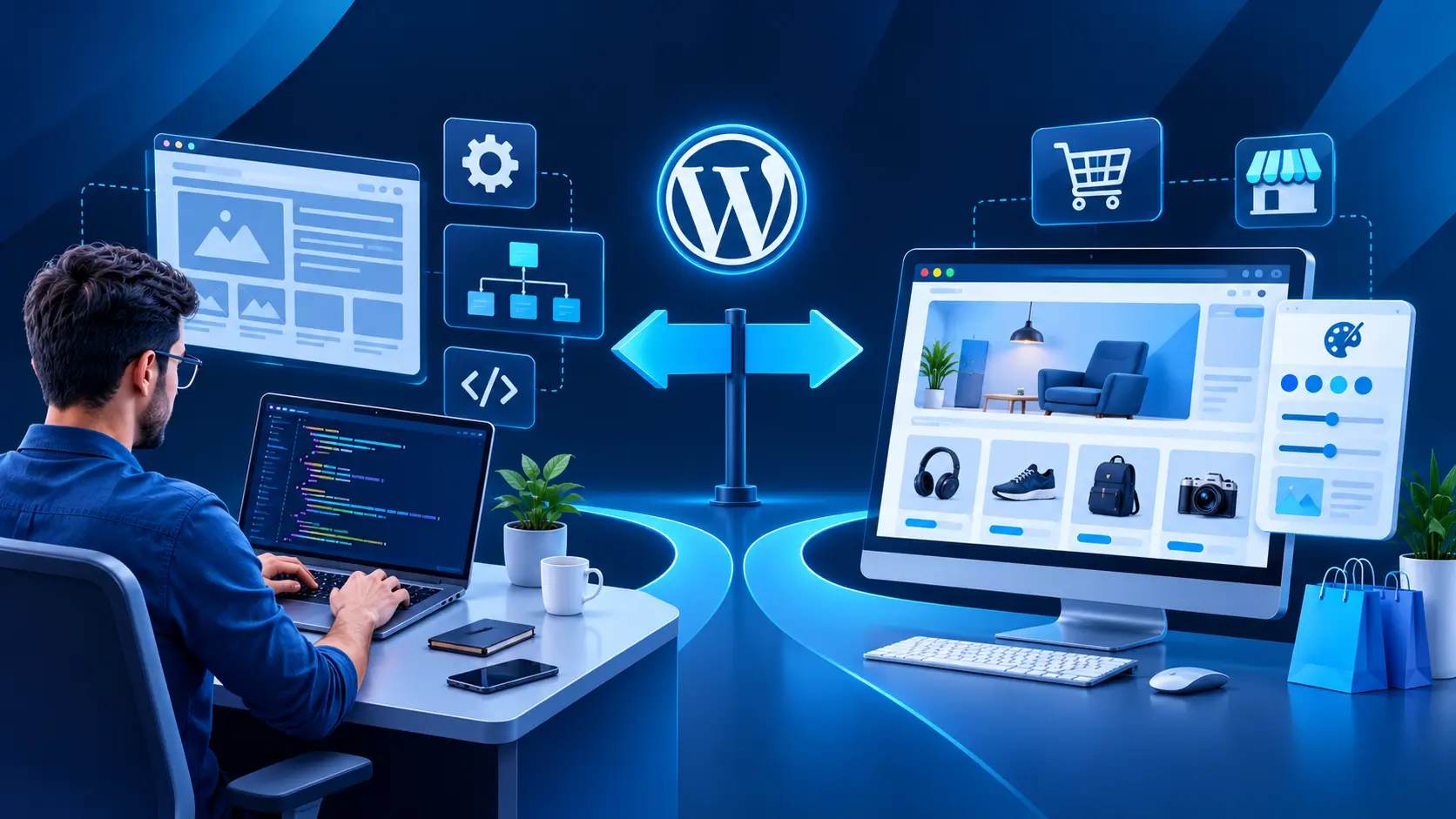
Planning a marketplace is the fun part. Then the development questions show up. You need more than a homepage and a handful of listings: vendor dashboards, booking systems, payment gateways, commission rules, search filters, user registration, and everything else that keeps a marketplace running smoothly.
Table of Contents
ToggleThat’s usually the moment owners start weighing two options. Hire a WordPress theme developer to build it from scratch, or pick a marketplace theme and bend it to fit the business.
Either path can get you live. They just cost different amounts, move at different speeds, and give you different levels of freedom.
Before paying for custom development, ask yourself one question: does an existing theme provide the foundation I need? If so, customizing it can reduce the workload while leaving plenty of room to tailor the site to your business model.
Let’s compare the two approaches and figure out which one suits your marketplace.
Why Should You Consider Customizing an Existing Marketplace Theme First?
A ready-made foundation beats an empty folder.
Visualize a rental marketplace where property owners register, publish listings, manage their availability, and take bookings. Build each of those parts from zero and you sign up for planning, development, testing, and integration, again and again. A marketplace theme often has a good chunk of that done already, so your time goes into what makes your business different.
Here’s why that’s worth a look first.
1. Start With Existing Marketplace Features
Marketplace themes often come with certain conditions: vendor registration, listing management, booking systems, payment integration, and user dashboards. There’s no reason to pay someone to create it again if a theme already covers a condition.
For example, can begin with a working booking system and then tweak the pricing rules, listing fields, or booking flow to match the business.
2. Reduce Unnecessary Development Work
Plenty of marketplaces don’t need a brand-new booking engine or vendor management system. If a theme already handles most of what you want, aim your development budget at the gaps. You skip rebuilding what already works.
3. Customize the Website Around Your Brand
Starting from a theme doesn’t lock you into a cookie-cutter look. Colors, typography, homepage layout, listing pages, and navigation are all open to change, so the site can carry its own identity.
You can reshape the customer journey too, making it easier to browse, book, and buy.
4. Add Features as Your Business Needs Grow
Your requirements won’t stand still after launch. You might begin with basic vendor dashboards and listing management, then want extra payment options, sharper search filters, custom commission structures, or subscription plans down the road.
Customization lets you build on the same foundation as you grow, provided the theme’s architecture can handle the changes.
What Does Hiring a WordPress Theme Developer for a Marketplace Involve?
Hiring a WordPress developer makes sense when a project needs specialized work. Just be clear about the scope. Asking someone to customize an existing theme is a different job from asking them to build an entire marketplace from nothing.
A custom-built marketplace may mean the developer has to:
- Plan the website architecture and database structure.
- Design separate dashboards for customers, vendors, and administrators.
- Develop listing submission and management systems.
- Build booking, reservation, or purchasing workflows.
- Integrate payment gateways and commission systems.
- Develop search filters and listing discovery features.
- Test the website and resolve technical issues.
Say you’re building a marketplace where customers rent photography equipment from several vendors. Every vendor needs a dashboard, an availability calendar, pricing controls, and booking management. Without a marketplace framework to start from, a developer may have to build each of those systems one by one.
That path gives you a great deal of control. It also asks for careful planning, development resources, testing, and ongoing technical support. Choose custom development when your business needs something existing marketplace solutions can’t reasonably deliver.
Customizing a Marketplace Theme vs Hiring a Developer: Key Differences
Both routes end in a working marketplace. Where you start changes how you get there.
| Comparison factor | Customize an existing theme | Build with a developer from scratch |
| Starting Point | An existing marketplace framework | A new development project |
| Development Process | Modify existing functionality | Develop every required system |
| Time Investment | Often shorter when the features already exist | Usually longer, with more development |
| Budget | Can cut unnecessary development costs | Depends on the full development scope |
| Design Flexibility | Depends on the theme and any custom work | More control over the design |
| Functionality | Existing features plus custom additions | Features built around your requirements |
| Maintenance | Theme and customization upkeep | Ongoing custom-code upkeep |
| Technical Involvement | Less work when the theme meets your needs | More planning and oversight |
The main difference is that customizing builds on work that already exists, while building from scratch starts with a fresh technical foundation.
However, customization does not eliminate the need for developers. Professionals may still be required for complex design modifications, payment integration, and additional marketplace functionalities.
When Is Customizing an Existing Marketplace Theme the Better Choice?
For many marketplace businesses, customization is a sensible starting point, because they don’t have to develop every feature themselves. It’s worth a serious look if any of these situations sound familiar.
You Need Standard Marketplace Functionality
If you need vendor registration, listing management, payment processing, booking calendars, or digital product delivery, look for a theme that already includes them. Someone building a vacation rental marketplace, for example, may not need a new booking system when a theme already supports availability calendars and reservation management.
You Want to Launch Without Building Everything From Scratch
A marketplace goes through several stages: planning, design, coding, and testing. An existing theme hands you a starting structure. You configure the features it offers and spend your development time on the changes your business really needs.
You Have Specific Design Requirements
Maybe you like a theme’s functionality but want a different look. A unique homepage, custom listing cards, different navigation, or a branded vendor dashboard, for instance.
Those changes don’t mean rebuilding the whole site. A developer can reshape the design and keep the marketplace functionality underneath.
You Want to Extend Existing Features
Sometimes a marketplace needs just a few extras: different commission rates for different vendors, custom listing fields, or a changed booking flow. If the theme supports those modifications, customizing is usually more practical than building a separate marketplace system.
When Should You Hire a WordPress Developer to Build From Scratch?
Customization works for many projects, but not all of them. Some marketplaces need more than a theme can give. Consider custom development when:
- Your business model is highly specialized: your marketplace needs an operating system that standard themes cannot handle.
- You need a different architecture: your project calls for custom database structures, complex integrations or specialized workflows.
- Existing features do not meet your requirements: changing the theme would mean work on theme underlying functionality.
- You need integrations: your marketplace depends on outside systems that require custom development.
- You have a defined specification: you already know exactly how the marketplace should work and you have the budget to build the marketplace.
Before you commit, ask a developer to judge whether an existing theme can support your requirements. That one step can save you from paying for development you don’t need.
How Utillz Customization Helps You Build a Marketplace
You don’t have to choose between a ready-made theme and a full custom build. It offers a middle route: start with an existing marketplace theme, then customize it with help from the team that built it.
The customization service covers both Brikk and Heilz. The team works on design changes, feature development, payment customization, plugin integration, and other marketplace requirements. Here’s how each theme fits different business models.
Customize Brikk for Rental and Booking Marketplaces
Brikk gives you a foundation for rental, booking, reservation, and directory marketplaces. Its existing capabilities include:
- Nightly, hourly, and appointment-based bookings
- Front-end dashboards for vendors and customers
- Listing management and availability calendars
- WooCommerce payment integration
- Commission management
- 2-way iCal synchronization with supported booking platforms
Imagine a rental marketplace where property owners set their own pricing rules, or where customers book multi-day events with limited capacity. Instead of building the whole booking system from scratch, you can start with Brikk and request the extra functionality your business needs.
The team has also completed custom projects involving seasonal pricing rules, specialized booking types, host verification, location-based search, and payment distribution through Stripe Connect.
Customize Heilz for Digital Product Marketplaces
Heilz gives you a foundation for digital product stores and multivendor marketplaces. Its existing capabilities include:
- Digital product listings
- Vendor dashboards
- WooCommerce payment integration
- Download plans, with recurring subscription levels available through a separate subscriptions plugin
- Commission management
- Product discovery and search tools
Now imagine you want designers to sell templates, fonts, and stock photographs. You may also want bulk product uploads, customized vendor earnings reports, product update notifications, or different download licensing options. Those wishes can become customization projects instead of reasons to build a whole new marketplace.
Utillz has documented completed customization work involving vendor dashboards, bulk uploads, download licensing, subscription credits, and product update notifications.
What Customization Services Can You Get?
The service goes well beyond new colors and layouts. Depending on what you need, the team offers:
- Theme installation and configuration: set up the theme, import demo content, and configure the essential marketplace settings.
- Design and branding: adjust colors, typography, homepage sections, listing cards, and other visual elements.
- Custom feature development: add functionality the existing theme doesn’t provide.
- Plugin integration: connect outside tools and services to your marketplace.
- Payment customization: change checkout workflows, payment integrations, and commission settings.
- Performance optimization: review your site and improve how fast it runs.
- Ongoing maintenance: arrange support for updates and other upkeep.
The team works project by project: it reviews your requirements, gives you a quote, builds the changes on a staging environment, collects your feedback, and hands over the finished work.
Explore the Utillz WordPress customization service to talk through your marketplace requirements.
Final Thoughts: Customize First or Build From Scratch?
Choosing between a WordPress developer and a customized marketplace theme comes down to what your business actually needs.
If your call for a project with completely specialized functionality, then custom development may be the right investment. But if an existing theme already supports most of your requirements, customization helps you skip unnecessary development. You keep the features that work, change the parts that don’t, and add functionality as the business grows.
Start by listing your marketplace requirements and comparing them with what existing themes offer. That simple step shows you how much development your project really needs.
So, if you’re planning a rental, booking, or digital product marketplace? then explore Brikk and Heilz by Utillz, and talk to the team about customization before you commit to a full custom build.