
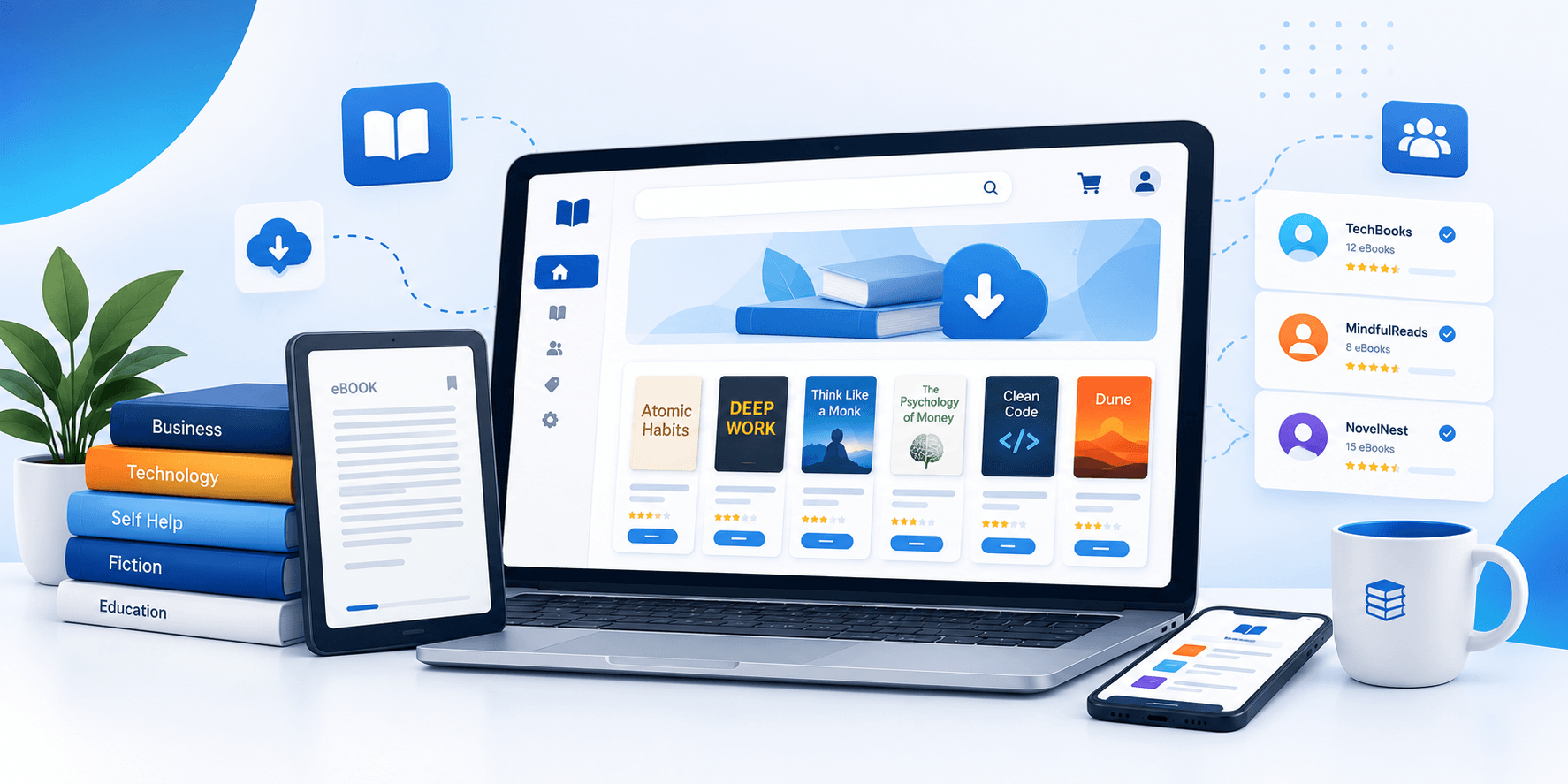
A basic digital store works fine if you’re the only one selling. But once you want other authors, writers, or educators publishing their own eBooks on your site, you need something built for that: author submissions, individual pricing, download limits, and a way to keep things organized as more sellers join.
Table of Contents
ToggleWordPress can handle this well, but the setup matters. You need a theme built around digital listings and vendor management, not a generic eCommerce template with a few extra plugins bolted on. Here’s what that setup actually looks like.
What Is an eBook Marketplace?
An eBook marketplace is a site where people discover and buy digital books from one or more sellers.
A basic store sells one publisher’s catalog. A multi-vendor marketplace opens that up, so different authors contribute their own eBooks, guides, or other written content, and customers get a wider range of material in one place.
This model tends to work best with a clear focus. Business books, educational resources, fiction, professional guides pick a lane, and it’s much easier for both authors and customers to know what the site is actually for.
Types of Written Content You Can Sell
An eBook marketplace doesn’t have to mean just books. Depending on your audience, you might sell:
- eBooks: fiction, nonfiction, business books, manuals, specialized publications
- Guides and whitepapers: shorter, practical resources for readers who want specifics rather than a full book
- Templates and planners: worksheets and printable resources sold as downloadable files
- PDFs and other digital resources: anything a customer downloads and uses on their own
A setup built for this kind of marketplace can handle this range of eBooks, guides, whitepapers, templates, planners, and printable PDFs all sitting on the same platform.
Whatever mix you choose, keep the product experience clear. A customer should know in a few seconds what the resource contains, who made it, and what they get after paying.
How Authors Submit Their Content
You don’t want to be the one manually uploading every file an author sends you that doesn’t scale past a handful of sellers. Instead, authors submit their own listings directly through the site.
A typical submission includes the product details plus the downloadable file itself. From there, you (or whoever administers the marketplace) review it before it goes live. The platform supports front-end submissions with admin approval, and you can set different listing statuses so nothing gets published without a check first.
It’s worth setting your own bar for what counts as ready. Requiring a clear title, description, category, cover image, and finished file before you’ll review something cuts down on half-finished listings landing in your queue.
A marketplace is really only as good as its worst listings, so a bit of friction at submission time pays off.
Creating eBook Listings
Once a submission is approved, the listing itself needs to do the selling. Keep it focused on what actually helps someone decide:
- Title
- Description
- Cover or preview image
- Author or seller info
- Category
- The downloadable file
- Price or download plan
There’s a built-in download-file field for attaching the digital asset itself, and multiple files can be packaged into a single ZIP for delivery useful if an author is bundling a main eBook with bonus material.
Think about the listing the way a customer would read it: what is this, who made it, what format do I get, and what am I paying for? If a listing answers those in the first few seconds, it’s doing its job.
Setting Prices and Download Plans
Not every seller wants to price things the same way, and Heilz doesn’t force them to.
Individual products can be sold at a flat price with a single-purchase model, straightforward, good for a standalone eBook. Or you can set up a download plan, which bundles a price with a fixed number of downloads (set that number to zero for unlimited) and defines what the listing owner earns from each one.
That flexibility means one author can sell a single eBook outright while another offers a resource pack through a download-plan structure same marketplace, different setups. If you install the subscription extension, recurring access is also on the table for marketplaces that want a membership-style model.
Which approach fits depends on your content. A marketplace built around individual books usually does fine with straightforward pricing; a larger library of resources tends to benefit more from download plans or subscriptions.
Secure Digital Delivery
With digital products, delivery is part of the experience there’s no shipping to fall back on, so access control matters.
The setup includes time-limited download links, download limits, and IP-based protection, so files aren’t sitting exposed for anyone with the link to grab. Authors can also attach supporting files alongside the main resource, and everything gets packaged into one download bundle at checkout.
Worth being upfront about one thing: no download protection stops a determined person from sharing a file after they’ve bought it. The goal isn’t airtight security it’s making the buying experience smooth for legitimate customers while keeping casual redistribution in check.
Wrapping Up
A multi-vendor eBook marketplace is really a workflow: submissions in, review, a listing that sells the content clearly, pricing that fits the product, and delivery that doesn’t create headaches for you or the customer.
Deciding what you’re selling and who it’s for first shapes almost everything else. Heilz handles the rest, from author submissions through to the download itself.
Setup gives you vendor submissions, flexible pricing, and secure delivery in one WordPress theme no custom development required.